


Mutation-aware binding prediction for drug and agrochemical resistance
A compound that works on the bench and fails in the field
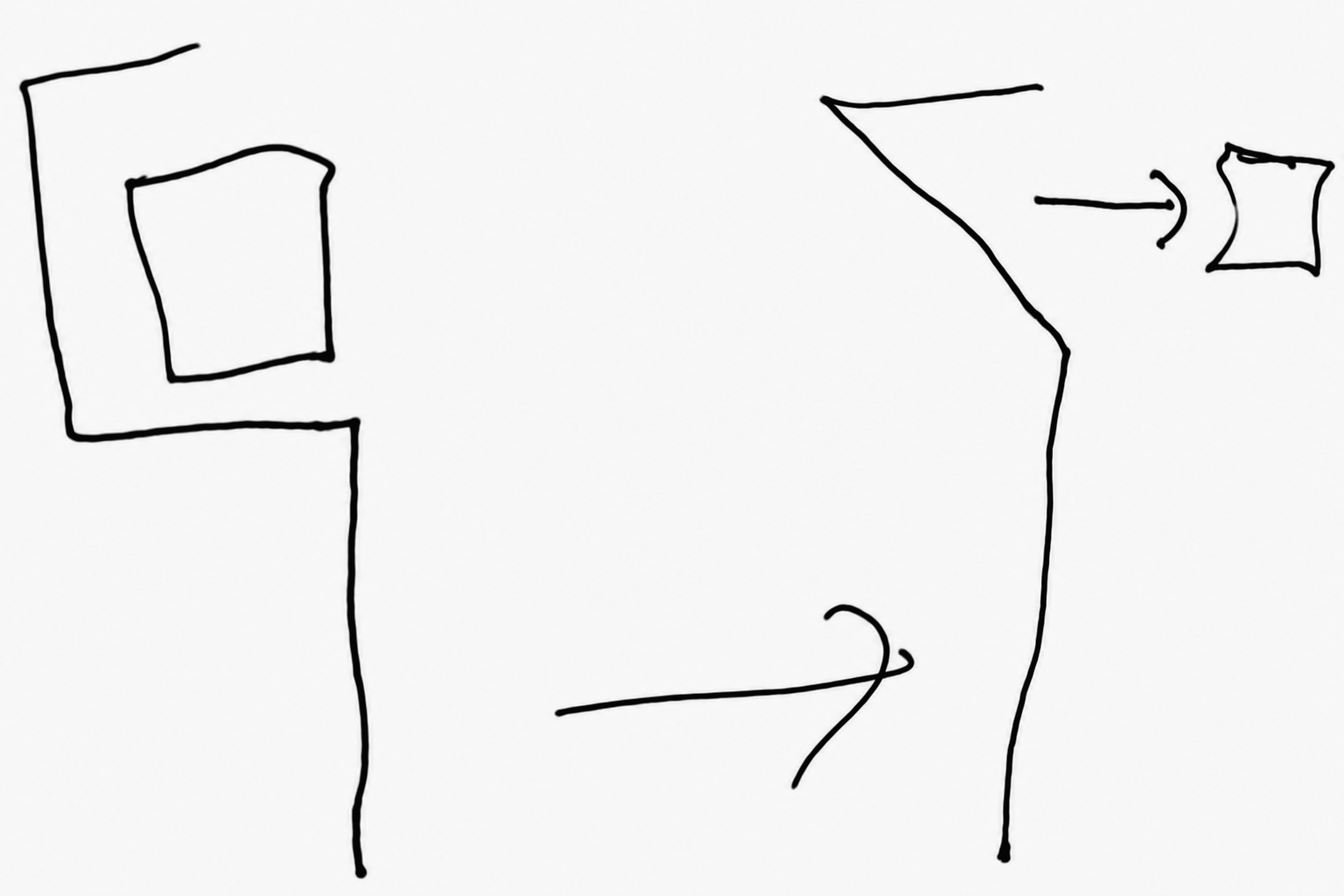
A representative lock and key
Five years of development. A molecule that binds its target precisely. Then a field trial — and a single point mutation in that target, and the compound does nothing.
Think of the compound as a key, and the target protein as a lock.
If it fits. The molecule sits in the protein's binding site. The compound works.
Then, the lock changes shape. A point mutation alters that binding site.
The same key no longer turns. This is resistance. Not a formulation problem, not a delivery problem — a binding problem, at one site, from one substitution.
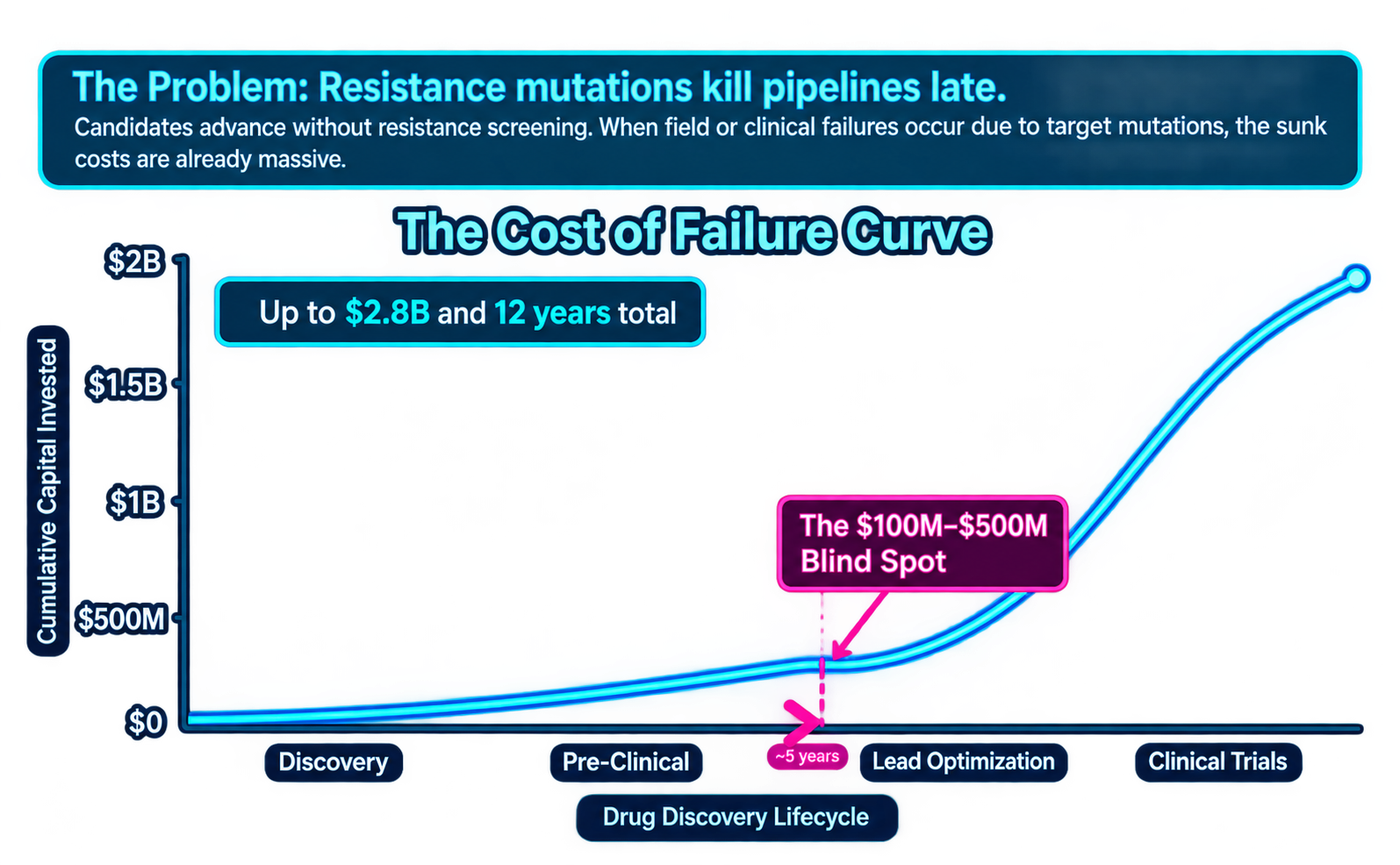
Compute the resistance before you commit to the molecule.
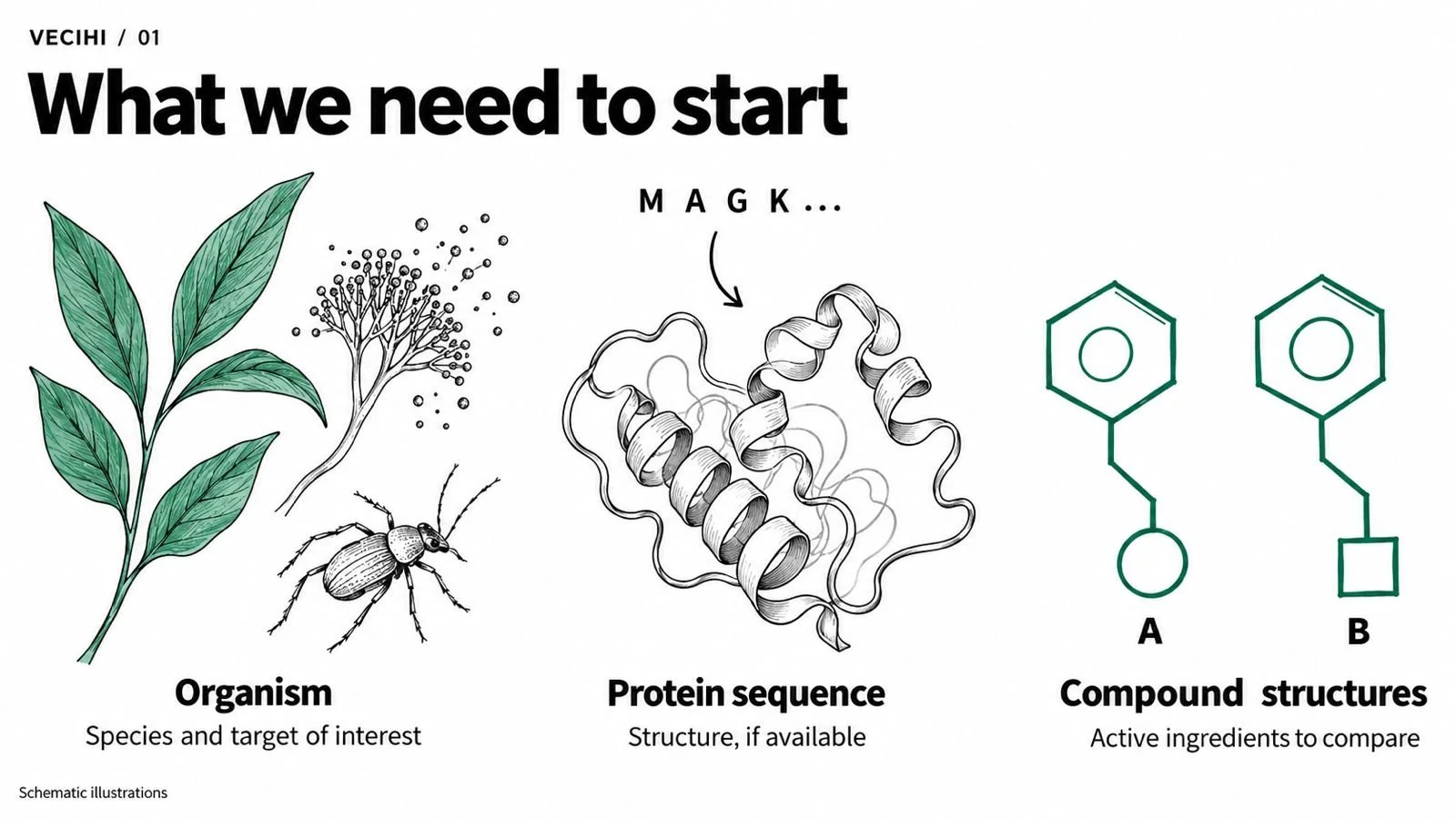
MutFEP evaluates how a point mutation in your target changes the binding free energy of your compound. Not a docking score, not a prediction from a trained model, the free energy difference itself, calculated from molecular dynamics.
You give us a target structure, a mutation list, and one or more compounds. You get back a ΔΔG for every compound; mutation pair, ranked, with the mechanism behind each loss of affinity.
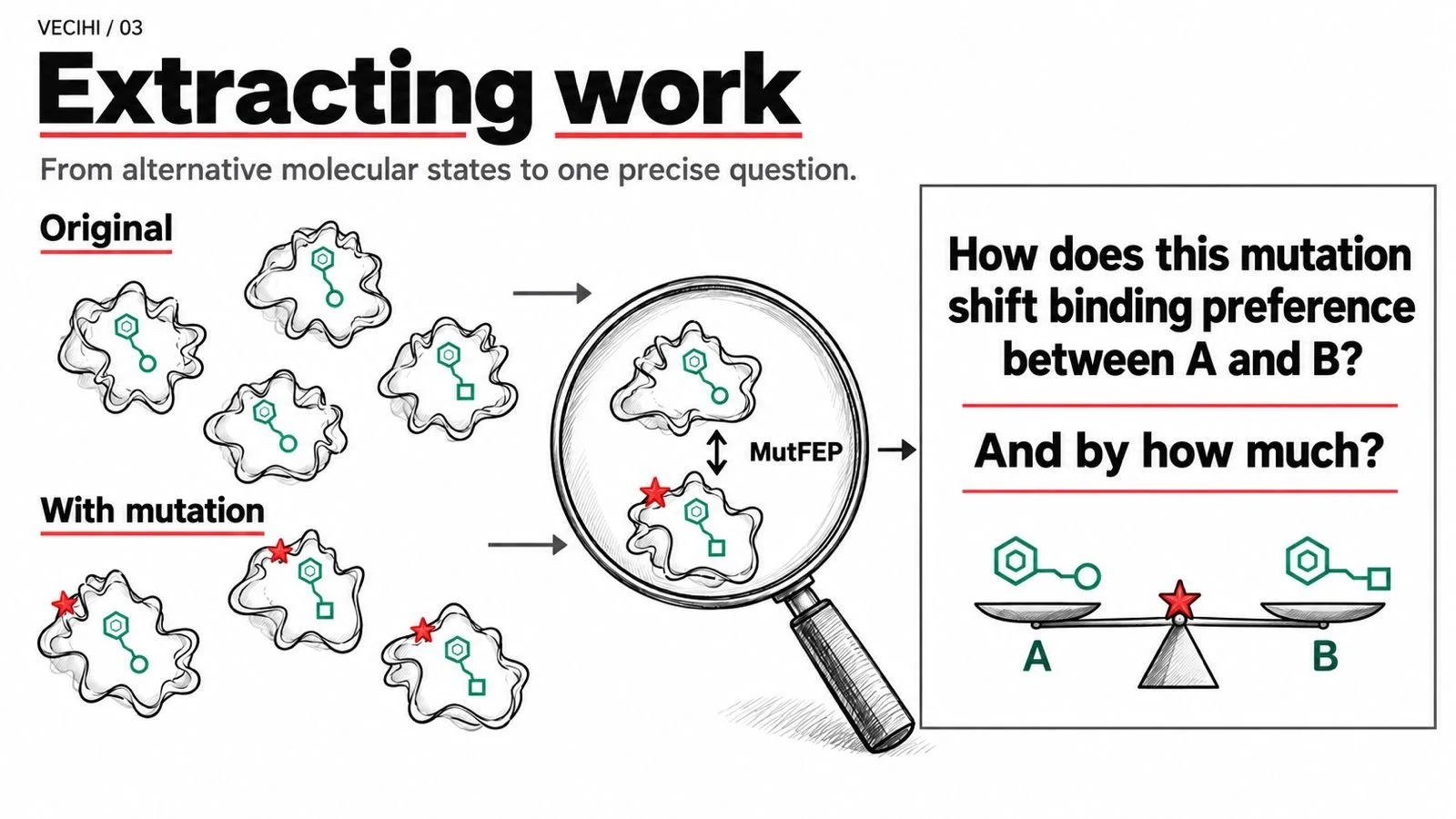
Physics, not pattern-matching.
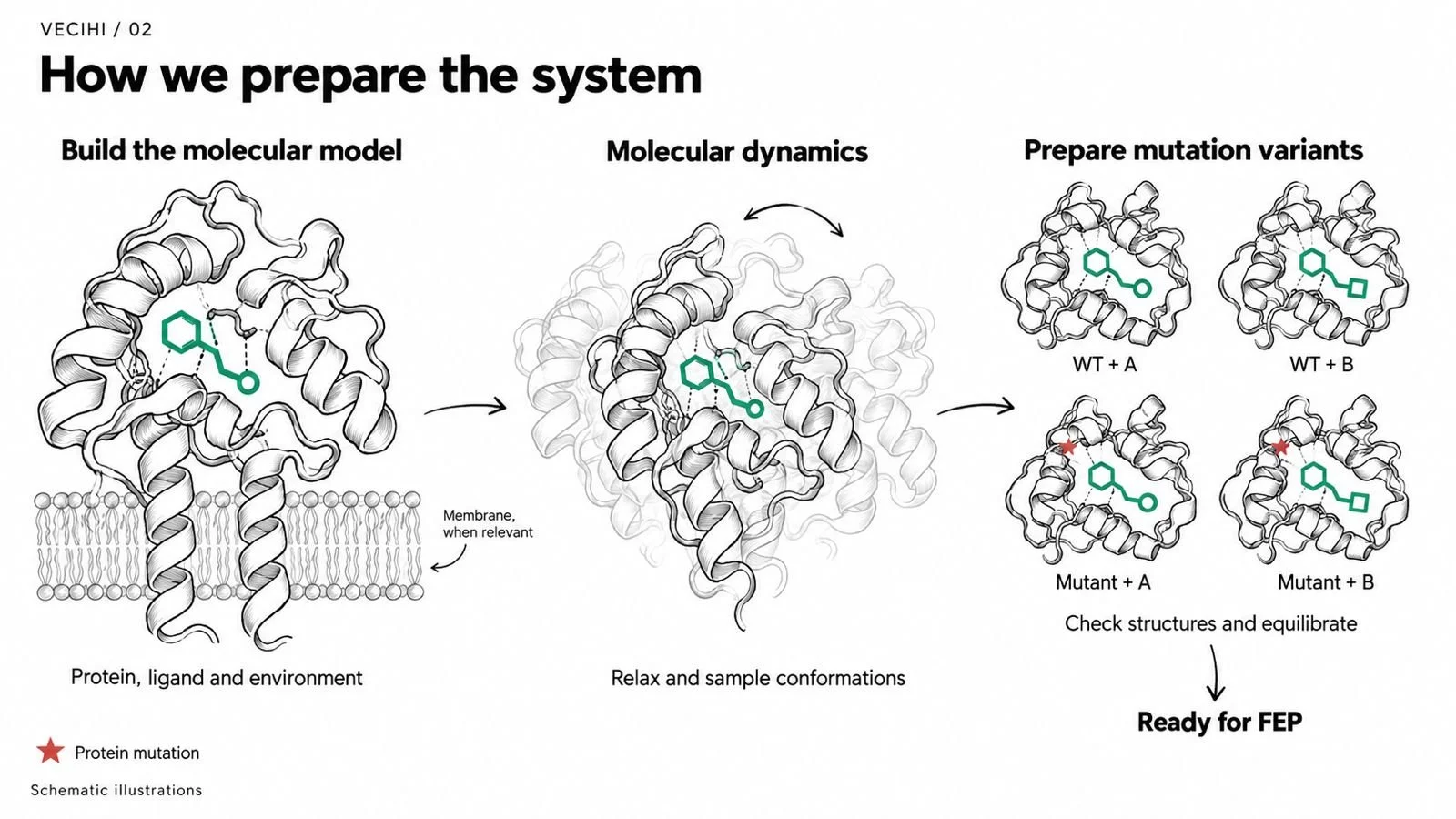
The method is alchemical free energy perturbation. There is no training set, so there is no question of whether your target resembles the data the model learned from. The calculation runs on the structure in front of it.
Panels, not single points.
Mutations are run concurrently on HPC rather than sequentially. Panel size is a compute question, not a schedule question.
Weeks, not seasons.
A mutation panel returns in weeks. The assay-and-field-trial route that currently answers this question returns in years, and only after the compound exists.
A report, not software.
You are not buying a licence, a platform seat, or a pipeline to maintain. You receive a resistance risk report your chemists can act on.
Where it works, and where it doesn't.
Target-site point mutations are what this method is built for, and where the published error is small enough to make decisions on.
Metabolic resistance, target overexpression, and efflux are outside scope. We compute binding.
What does alchemical free energy perturbation mean?
The thermodynamic cycle.
Rather than simulating a mutation event directly, the calculation transforms wild-type into mutant alchemically, along a series of non-physical intermediate states, in both the bound and unbound legs. The cycle closes against experimental inhibition constants, which is what makes the result checkable rather than merely self-consistent
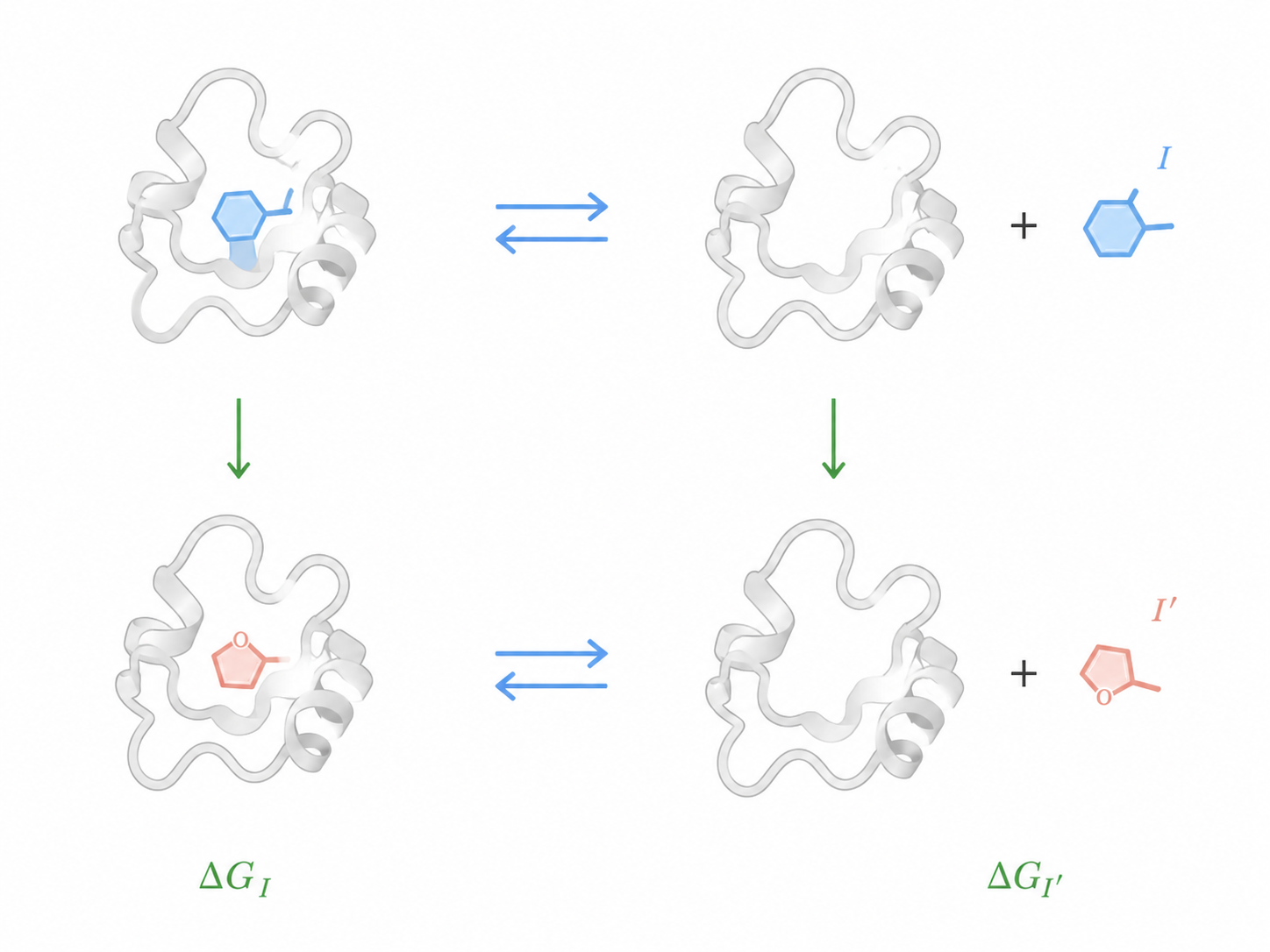
Alchemical free energy perturbation, applied to mutation panels.
A mutation changes binding affinity by changing the free energy of the bound state relative to the unbound state. That difference — ΔΔG — is the quantity that determines whether your compound still works.
It cannot be read off a structure. It has to be computed, because it includes the entropy of a binding site that moves.
Our published portfolio
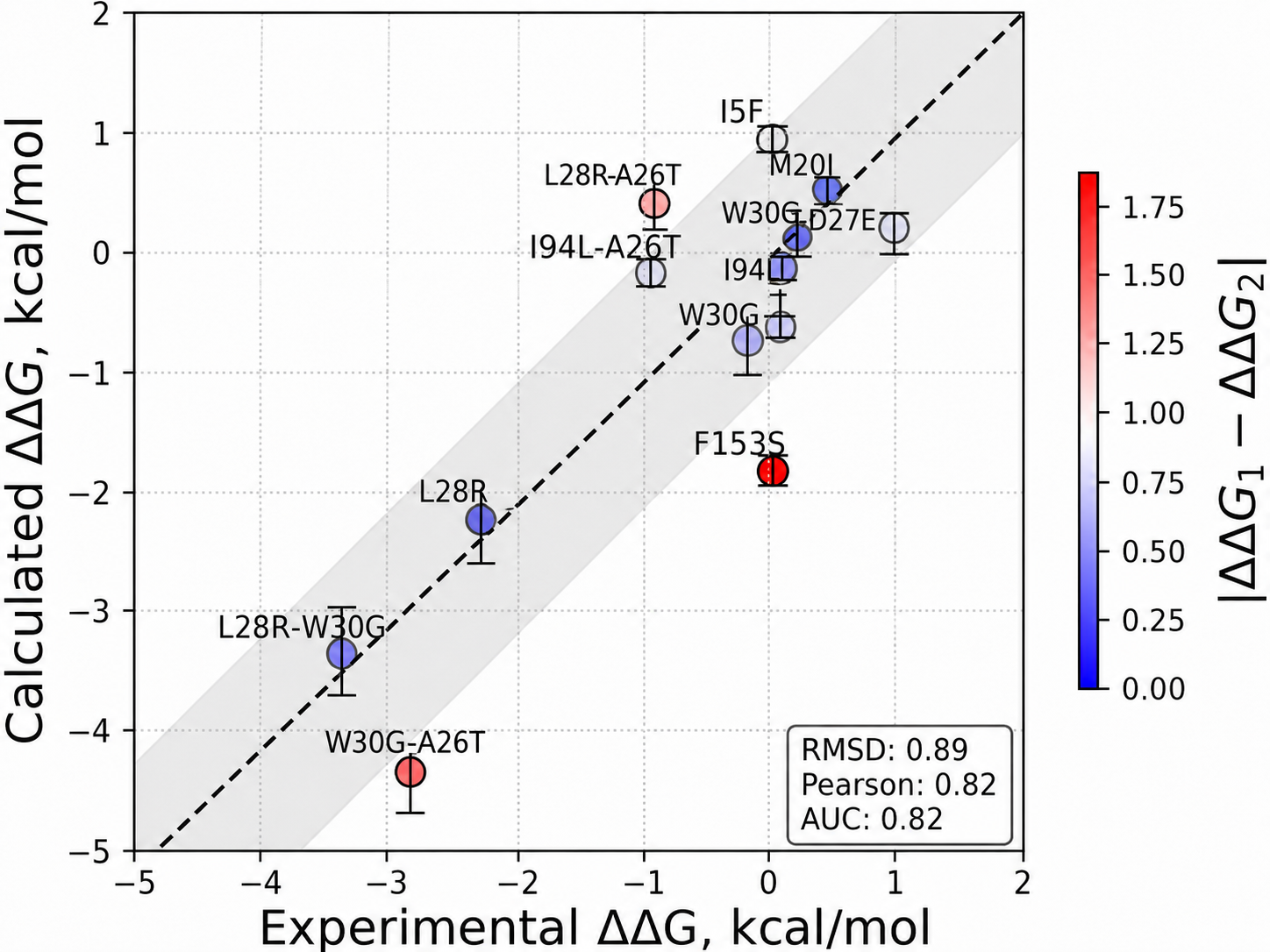
DHFR
Dihydrofolate reductase is the target of trimethoprim, and trimethoprim resistance in E. coli arises through documented point mutations in that binding site. It is a real resistance problem with experimental ΔΔG values published against it — which makes it a benchmark rather than a demonstration.
13 mutations. Mean absolute error 1.1 kcal/mol against experiment.
That figure matters because of what sits either side of it. Experimental measurement uncertainty on binding free energies is of the same order. And the difference between a compound that holds against a variant and one that fails is typically larger than 1 kcal/mol. An error at 1.1 is small enough to rank mutations by severity and act on the ranking.
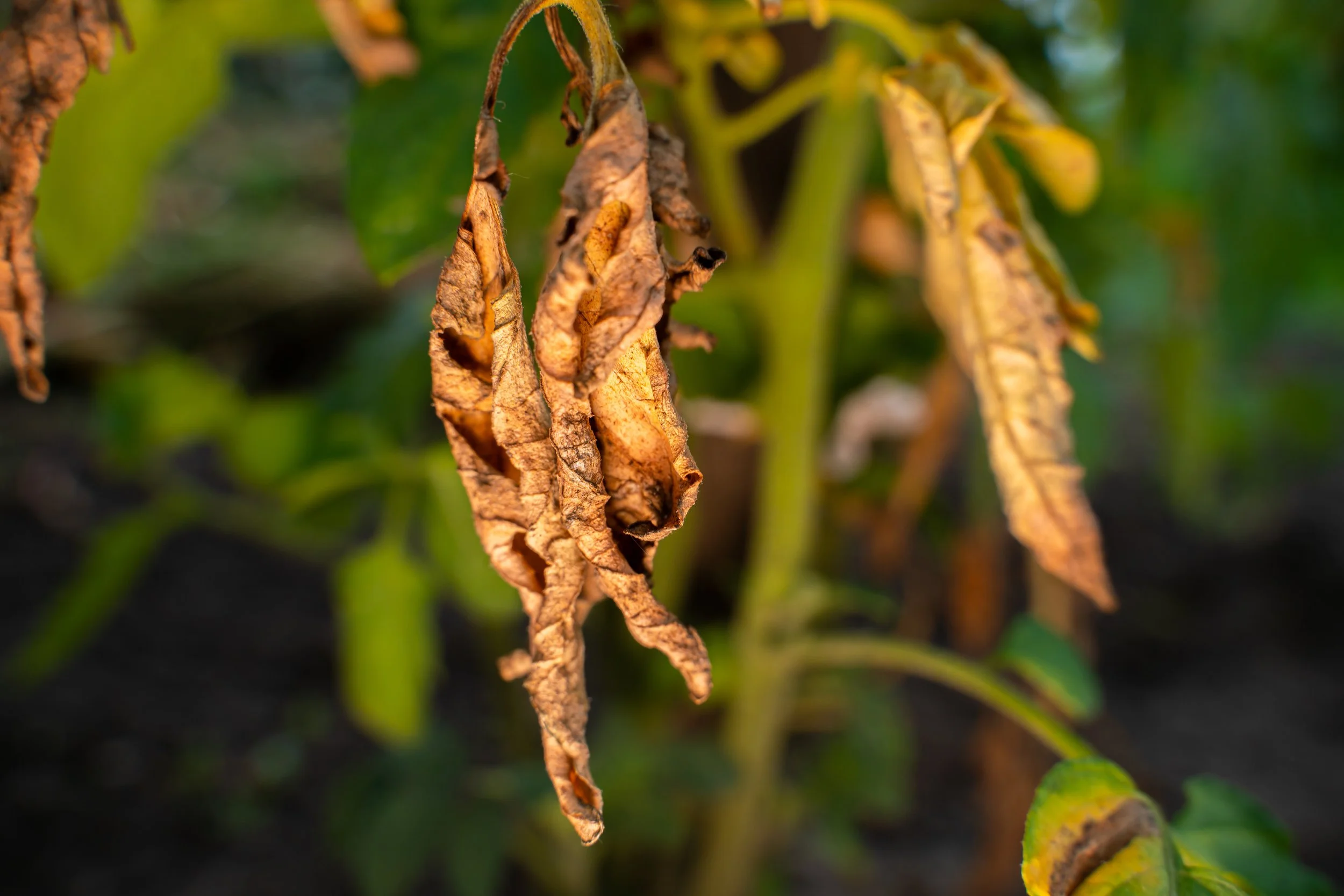
When it comes to resistance, the compound is the smallest thing you lose.

The program. A new crop protection active now takes an average of $307 million and 11.4 years to bring from discovery through registration [1] — with registration alone averaging about $35 million per active ingredient, roughly 12% of the R&D budget [1]. Resistance discovered in the field is a write-off against that whole figure, not against the synthesis cost.
[1] AgbioInvestor for CropLife International. Time and Cost of New Agrochemical Product Discovery, Development and Registration, 2026.

The clock starts sooner than you think. QoI fungicides were introduced in 1996; strobilurin-resistant wheat powdery mildew was identified in Germany in 1998 — two years later [2]. The pattern repeats across classes: benzimidazole resistance appeared in some pathogens after two years of use, and in one pathogen QoI resistance emerged after a single year [3]. A product with an eleven-year development cycle and a two-year resistance horizon is not the asset the business case assumed
[2] Rapid in situ quantification of the strobilurin resistance mutation G143A in the wheat pathogen Blumeria graminis f. sp. tritici. Scientific Reports, 2021.
[3] Corkley I., Mitchell J., Hawkins N.J. Fungicide resistance management: maximizing the effective life of plant protection products. Plant Pathology, 2022.

You lose the class, not the molecule. Cross-resistance generally applies across all fungicides sharing a mode of action [3]. One target-site substitution can therefore compromise everything in your portfolio built on that MoA, including compounds still in development. Azole resistance is now reported in 30 plant pathogens across more than 60 countries, and Botrytis cinerea alone has developed resistance to 15 different fungicide classes — with single isolates resistant to seven modes of action [3].
[3] Corkley I., Mitchell J., Hawkins N.J. Fungicide resistance management: maximizing the effective life of plant protection products. Plant Pathology, 2022.

There is no replacement waiting. Between 1952 and 1984, a herbicide with a new mode of action arrived roughly every other year. Since 1984, the industry has introduced one [4]. The last significant new herbicide MoA — HPPD — dates to the 1980s [5]. Meanwhile weeds have evolved resistance to 21 of the 31 known herbicide sites of action [6]. The toolbox is closing faster than it is being refilled
[4] Bourke I. Following several fallow decades, herbicide companies are searching for new modes of action. Chemical & Engineering News 100(22), 2022.
[5] Duke S.O., Dayan F.E., on new herbicide modes of action; cited in Weed Science, 2024.
[6] Heap I. The International Survey of Herbicide Resistant Weeds.weedscience.org.

The cost lands on the grower, then comes back to you. Herbicide-resistant black-grass costs the UK economy an estimated £400 million a year, with 820,000 tonnes of wheat lost annually — around 5% of UK domestic consumption. Under full resistance spread, modelling puts that at £1 billion a year and 3.4 million tonnes [7]. In Canada, herbicide resistance is estimated to cost producers $1.1–1.5 billion annually through increased herbicide use and reduced yield and quality [8].
[7] Varah A. et al. National-scale costs of herbicide resistance in black-grass. Nature Sustainability, 2020.
[8] Beckie H.J. State of weed resistance in Western Canada, via CropLife Canada, Economics of Herbicide Resistance.
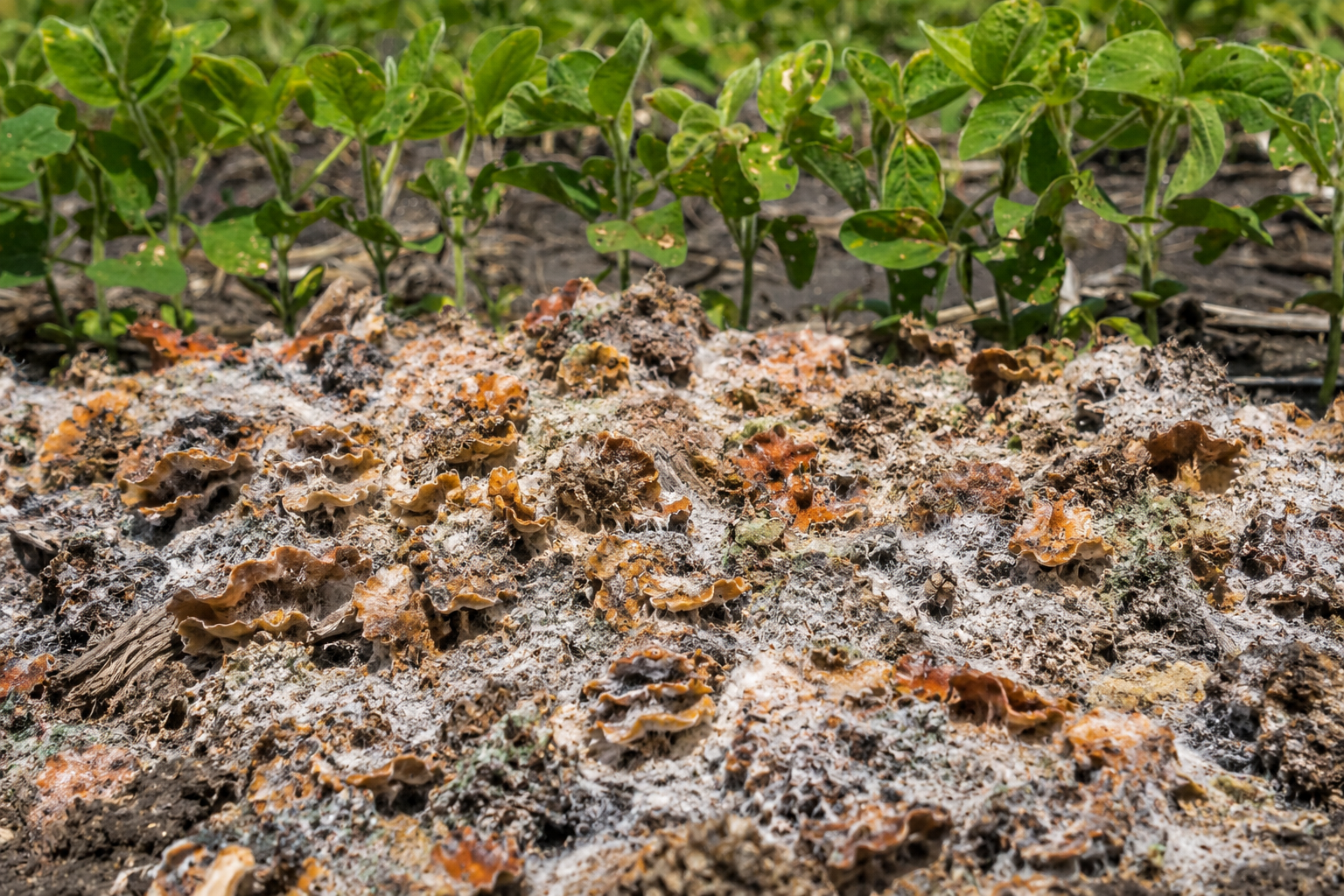
None of this is unpredictable.There are currently 548 documented unique cases of herbicide resistance worldwide, across 275 weed species and 168 herbicides [6]. Benzimidazole resistance has been recorded in close to 100 plant pathogen species over fifty years of use; QoI resistance in nearly 50 [3].
[3] Corkley I., Mitchell J., Hawkins N.J. Fungicide resistance management: maximizing the effective life of plant protection products. Plant Pathology, 2022.
[6] Heap I. The International Survey of Herbicide Resistant Weeds.weedscience.org.
These are catalogued, public, and mechanistically characterised — in many cases the specific substitution is known years before a new compound reaches a field trial. The information exists. It is simply not consulted at the point where it would still change which molecule you advance.
Up to 40% of global crop production is lost to pests and diseases each year, at an economic cost above $220 billion [9]. Resistance is not the whole of that number. But it is the part you can compute in advance.
[9] FAO. Scientific review of the impact of climate change on plant pests, 2021.
Who Are We?
Vecihi is a pre-seed deep-tech startup founded in Istanbul, building a physics-based platform for mutation-aware binding prediction. We are two people — a computational scientist and a software engineer — rooted in Sabancı University, where the scientific foundation of this platform was developed over close to a decade of hands-on work in FEP and molecular dynamics. Prof. Canan Atılgan, one of the leading figures in computational biophysics, sits on our advisory board and has been central to that work.
Our research has appeared in peer-reviewed publications, and that habit — stay close to the physics, make the numbers decision-worthy — carries directly into everything we build.
We are currently developing our MVP, supported by a MareNostrum HPC grant. Our beachhead is agrochemical R&D, where mutational resistance is both well-documented and computationally underserved. We are building our first external case studies with university research groups, and we are open for paid-pilot candidates starting October 1, 2026.
We stay small on purpose. Close to the physics, close to the science, accountable for every number we put in front of you.


Contact Us
Have a target, mutation set, or enzyme in mind?
Tell us what you're working on. We'll tell where target-site predictions can make a real difference — and where they can't.
We're based in Istanbul and we work with biotech and ag-biotech groups who need clear, decision-ready computational results. If you're exploring a paid pilot, this is the right time to reach out.
It helps to share — though nothing is mandatory:
A short description of your target or system, the questions you want answered, any timing constraints, and how you'd prefer to work — one-off study, pilot, or ongoing.