

❋
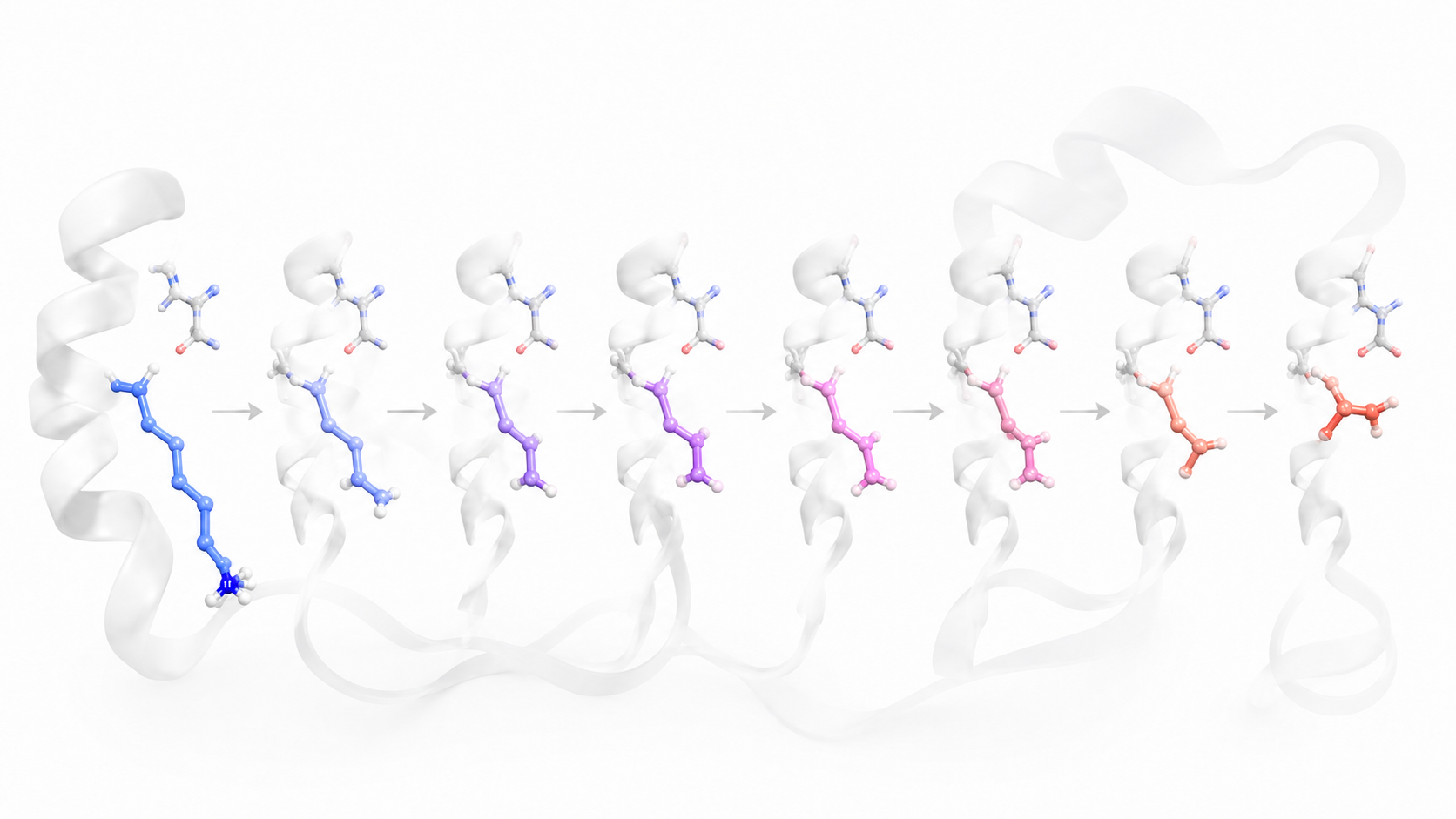
Alchemical Transformation
MethodAlchemical free energy perturbation, applied to mutation panels.
A mutation changes binding affinity by changing the free energy of the bound state relative to the unbound state. That difference — ΔΔG — is the quantity that determines whether your compound still works.
It cannot be read off a structure. It has to be computed, because it includes the entropy of a binding site that moves.
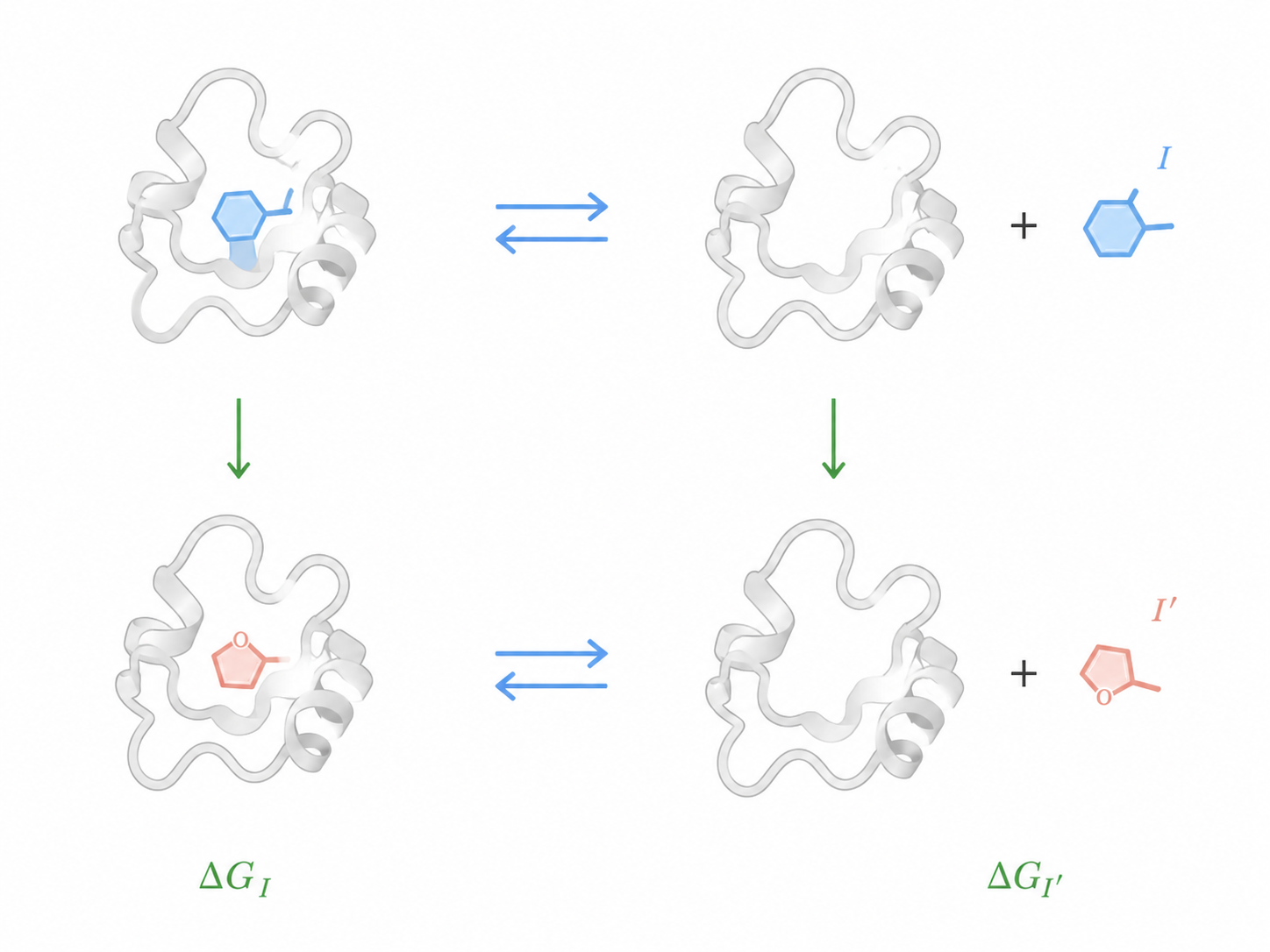
The thermodynamic cycle.
Rather than simulating a mutation event directly, the calculation transforms wild-type into mutant alchemically, along a series of non-physical intermediate states, in both the bound and unbound legs. The cycle closes against experimental inhibition constants, which is what makes the result checkable rather than merely self-consistent
Thermodynamic cycle.
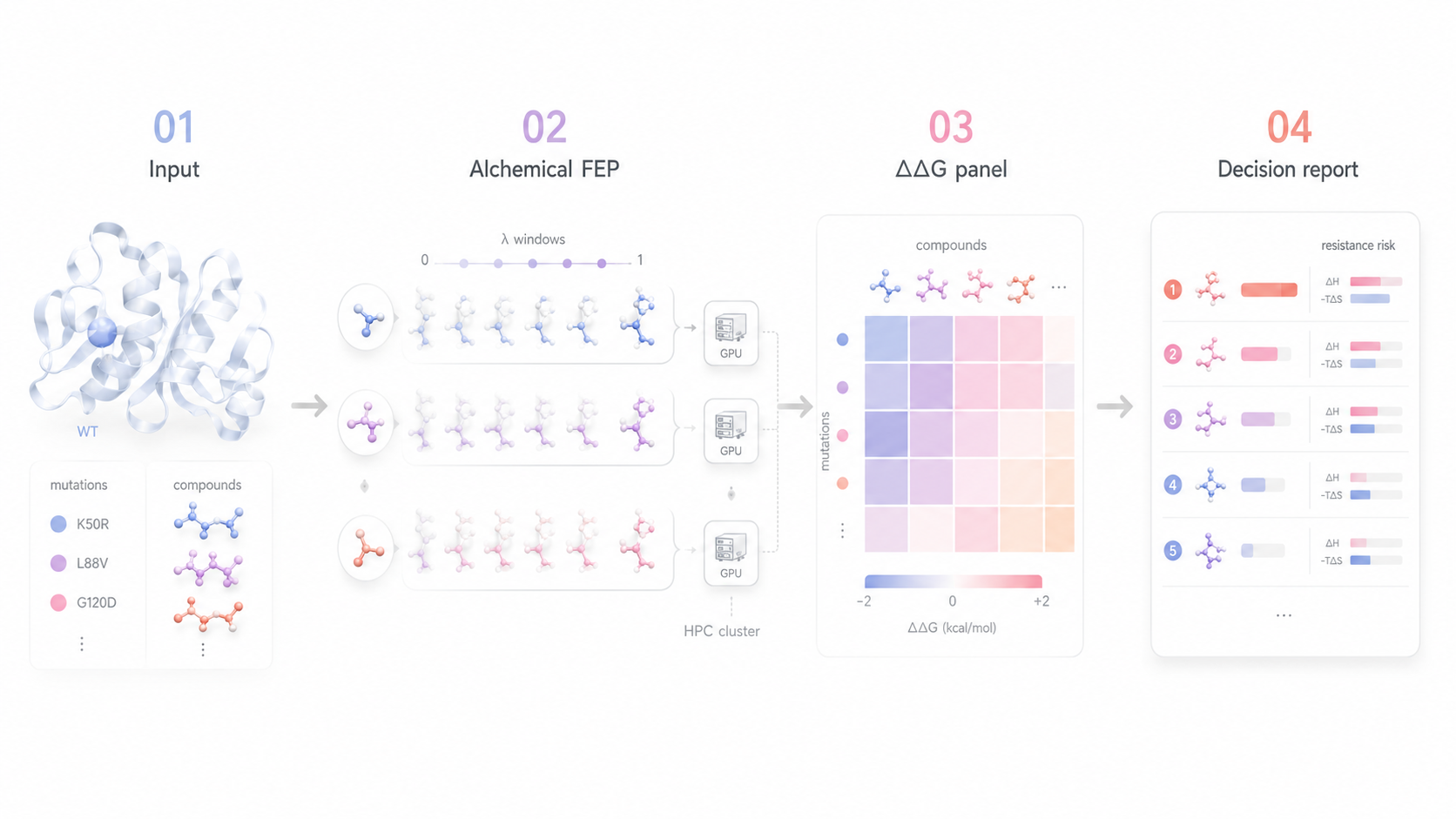
The pipeline
01 · Input : Wild-type structure, mutation list, compound set.
02 · Alchemical FEP : GPU-accelerated λ-transformations, one per mutation, run concurrently on HPC.
03 · ΔΔG panel : Binding free energy shift quantified for every compound–mutation pair.
04 · Decision report : Ranked resistance risk, with enthalpic and entropic decomposition per case
DHFR
Dihydrofolate reductase is the target of trimethoprim, and trimethoprim resistance in E. coli arises through documented point mutations in that binding site. It is a real resistance problem with experimental ΔΔG values published against it — which makes it a benchmark rather than a demonstration.
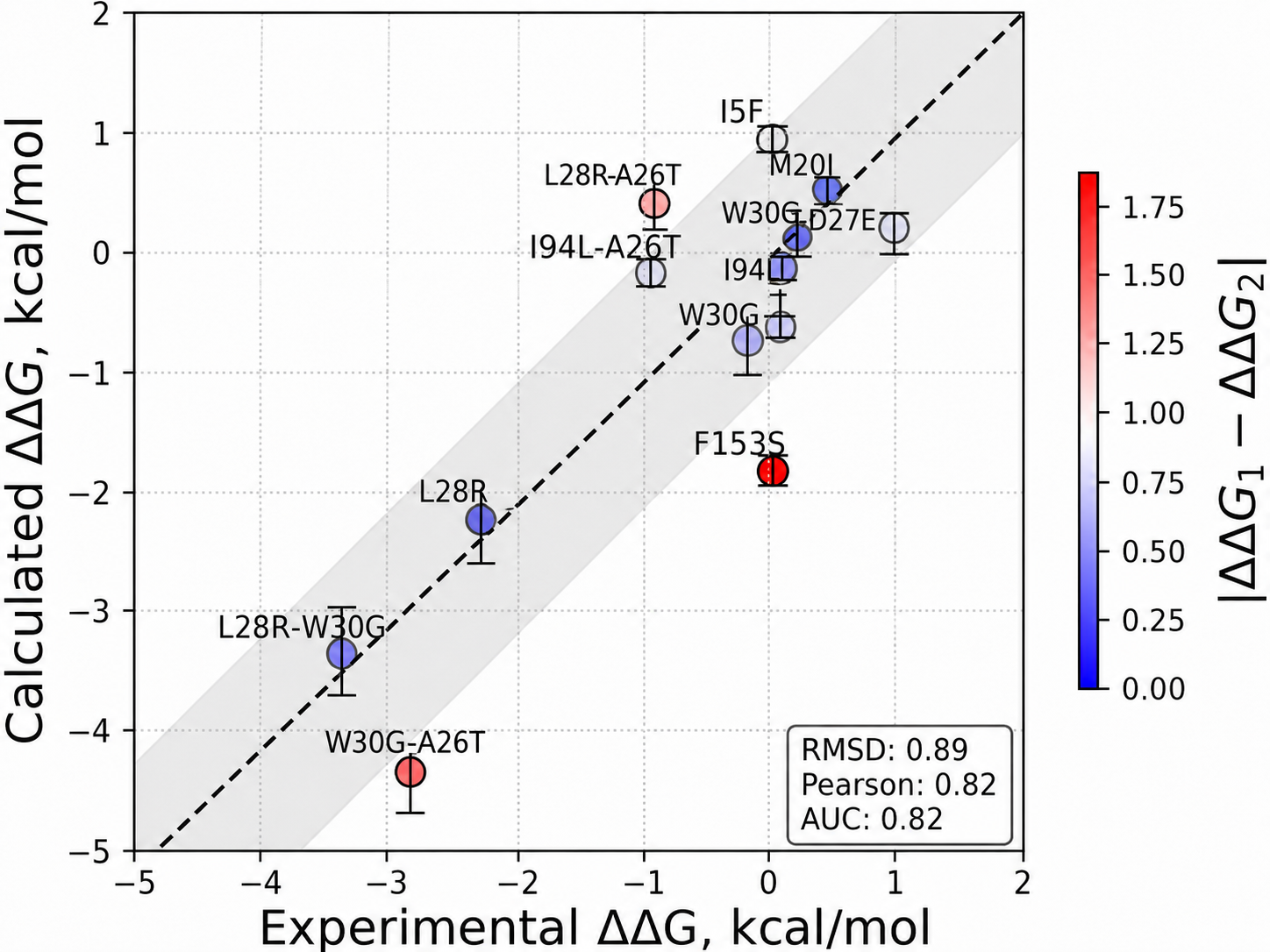
DHFR against trimethoprim resistance13 mutations. Mean absolute error 0.9 kcal/mol against experiment.
That figure matters because of what sits either side of it. Experimental measurement uncertainty on binding free energies is of the same order. And the difference between a compound that holds against a variant and one that fails is typically larger than 1 kcal/mol. An error at 0.9 is small enough to rank mutations by severity and act on the ranking.